AI in Education: Real Classroom Examples, Strategy, and Leadership
Kinwise is an AI-powered instructional coaching platform for teachers.
Explore how schools are actually using AI from classroom practice to district strategy.
Kinwise™: AI Insights for Educators
Want to learn more about Lydia?
I send a short note with each new episode: the backstory, what surprised me, and what it's making me rethink. Plus occasional reflections on building Kinwise Coach.
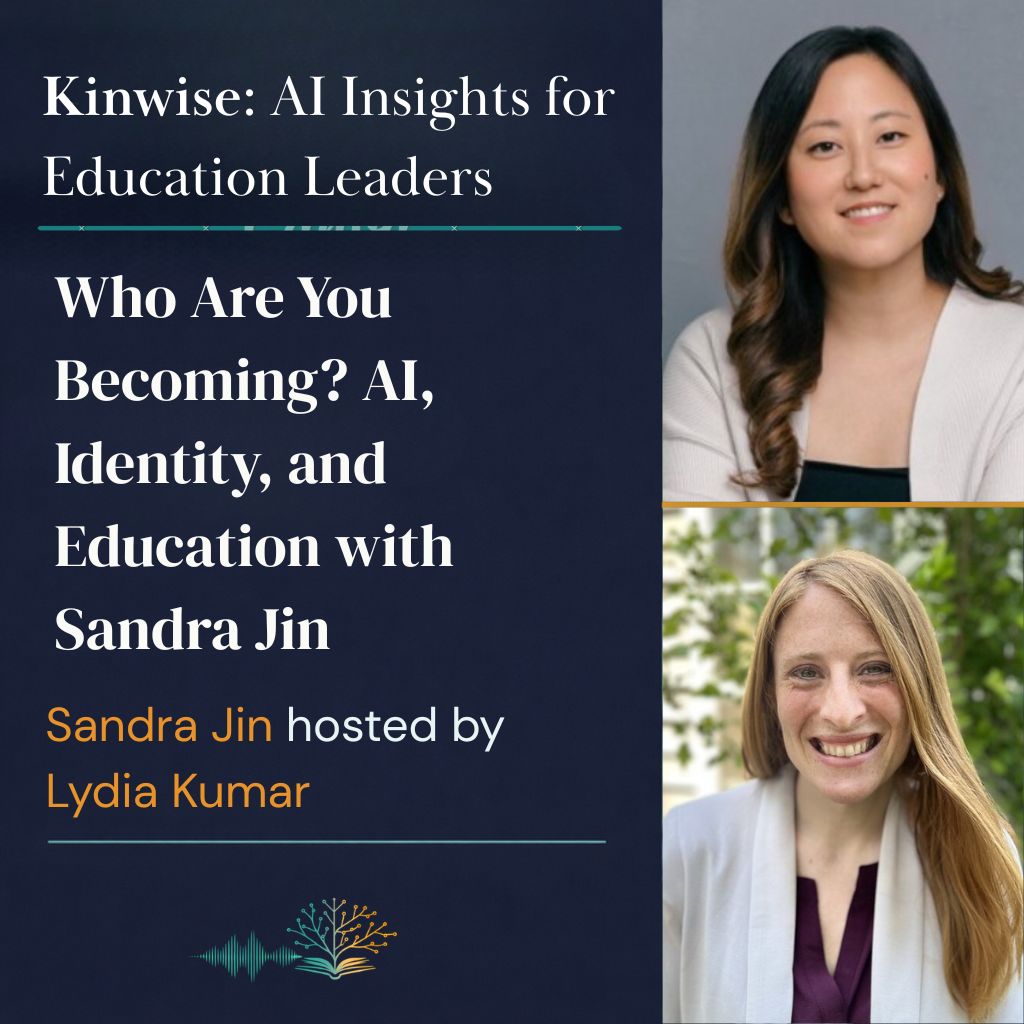
Who Are You Becoming? AI, Identity, and Education with Sandra Jin
In this episode of Kinwise: AI Insights for Education Leaders, host Lydia Kumar sits down with Sandra Jin, Senior Director of Innovation and AI Strategy at Leading Educators. Sandra has spent nearly a decade designing professional learning grounded in three tenets: agency, advocacy, and belonging. Those values show up in her work from national initiatives with rural school districts to career day at her kids' elementary school. This conversation is about what it actually looks like to bring AI into schools in a way that honors what educators and students need, and the question Sandra keeps coming back to: who are you becoming through how you use AI?
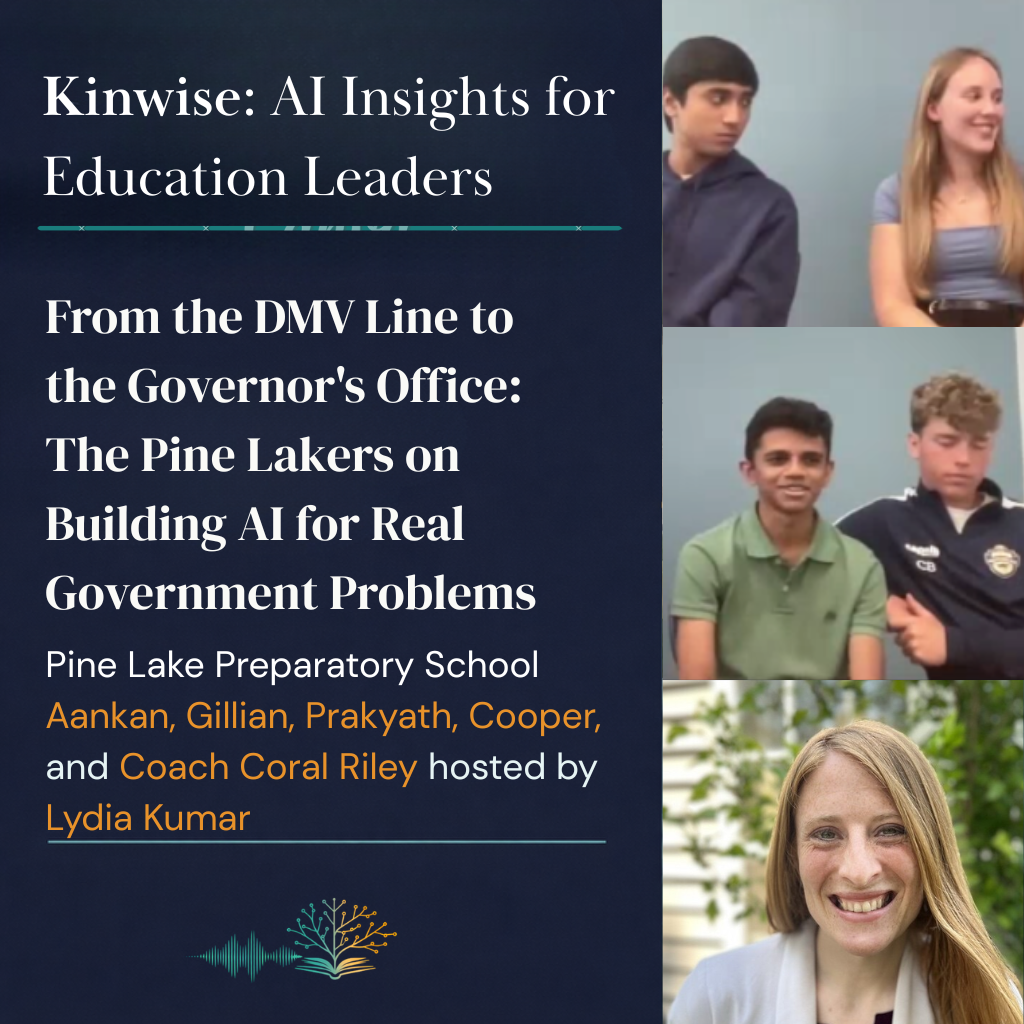
From the DMV Line to the Governor's Office: The Pine Lakers on Building AI for Real Government Problems
What happens when a student's frustrating trip to the DMV turns into a meeting with the governor's office? In this fourth episode of Kinwise's special series on the NC AI Solve-a-Thon, host Lydia Kumar sits down with the second-place finishers in North Carolina's first-ever AI Solve-a-Thon, the team built an AI-powered app designed to make DMV visits faster, clearer, and less frustrating.

We Put in the Work: The Byrd Brains on Solving Homelessness with AI
The Byrd Brains, third-place winners of the NC AI Solve-a-Thon, built the Jade Book to help unhoused residents in Cumberland County find critical resources. One team member has experienced homelessness three times.
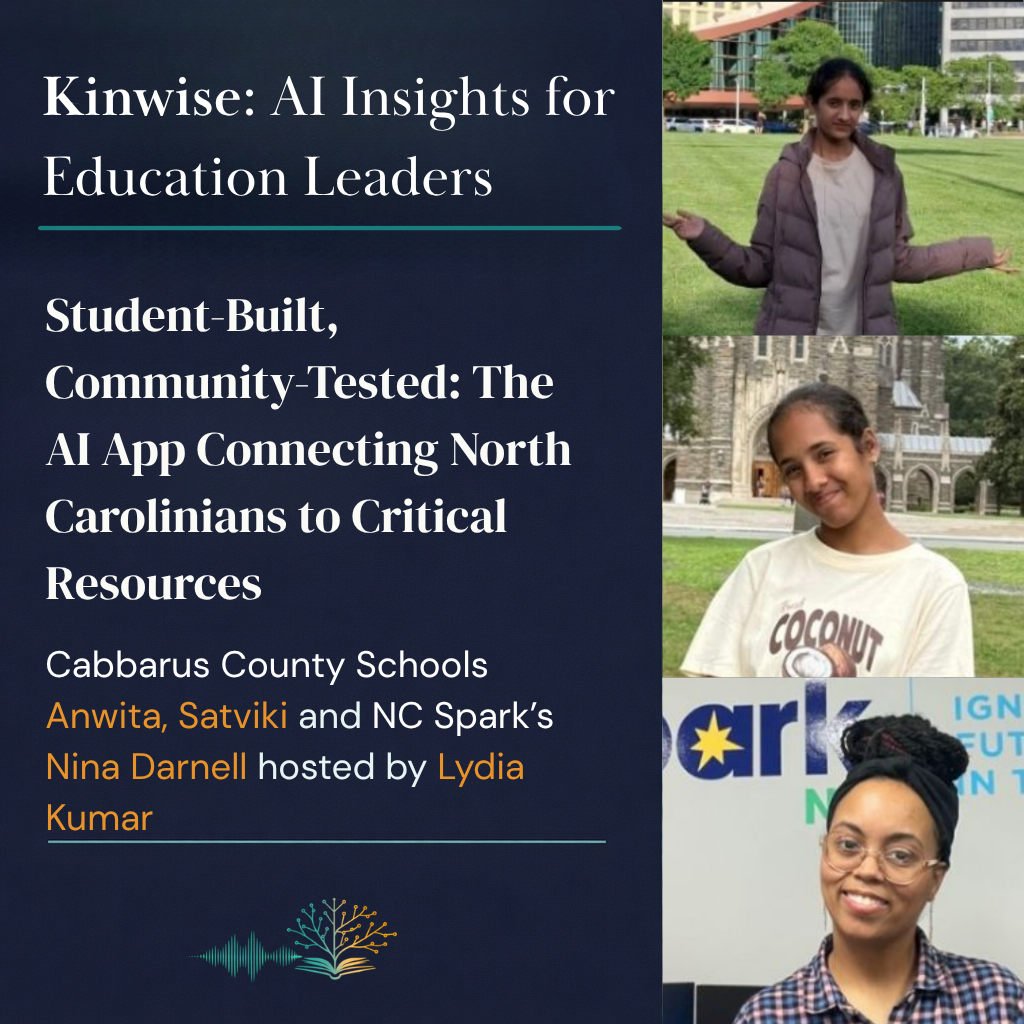
Student-Built, Community-Tested: The AI App Connecting North Carolinians to Critical Resources
Satviki and Anwita, first-place winners of the NC AI Solve-a-Thon, share how they built NC Connect Link, an AI-powered app helping North Carolinians find critical resources in one place.
NC's AI Solve-a-Thon Proved Students Are Ready. Are We?
North Carolina's first student AI competition showed what's possible when K-12 students are trusted with real community problems. Hear from the NC DPI leaders who built it.
Schools are Asking the Wrong Question About AI
Most schools start their AI conversation with "Does this tool work?" Educator and philosopher Priten Shah argues that's the wrong first question. In this episode, Priten shares a bioethics-based framework for ethical decision-making in K-12 and makes the case that classroom teachers, not district admins, are the most consequential AI decision-makers in any school
Rural Schools Are Beating Big Districts in AI. Here’s Why.
Think rural districts are "behind" on AI? Think again. Wyoming’s tech leader Steven Priest reveals how small schools are using high-trust, low-bureaucracy environments to lead the nation in AI adoption.
How One Teacher Used AI to Increase AP Pass Rates by 22%
Scott Kern, a veteran historian turned AP US History teacher at North Star Academy, didn't enter the AI space for efficiency alone. Instead, he sought to solve the "great sadness" of the profession: the inability to be everywhere at once for thirty unique learners. By developing custom feedback bots that mirror his instructional voice, Scott scaled his presence, resulting in a career-high pass rate on the AP exam.
How Teachers Are Using AI to Build Student Confidence
Ivanna Gutierrez joins the show to discuss the critical transition from being a consumer of technology to a creator, emphasizing AI literacy as a fundamental requirement for modern equity. Drawing on her experience in both IT consulting and the classroom, she shares how she guides students to use generative AI for problem-solving while maintaining the logical rigor needed for long-term success.
Schools Are Using AI Wrong. Here’s What Needs to Change.
Babak Mostaghimi joins Kinwise to discuss the "Three Horizons" of innovation and why K-12 leaders must prioritize pro-human AI over mere system efficiency.
What Happens When AI Can Write a Dissertation in 8 Minutes?
In an era where a doctoral dissertation could theoretically be generated in minutes, educational leaders face a profound dilemma: How do we prioritize the process of learning when the product can be automated?
Lydia Kumar sits down with Dr. Nicole Schilling and Dr. Jason Margolis to dissect the evolving role of Artificial Intelligence in high-stakes education. Approaching the topic through a "critical friends" model, they offer contrasting perspectives on the risks of cognitive atrophy and the potential for AI to serve as a rigorous simulation partner. Together, they explore the nuances of bias, the limitations of rigid policy, and the urgent need to redefine ethical guidelines for the next generation of leaders.
How Teachers Can Redesign Assignments for Deeper Learning
Dr. Dana Riger, UNC’s GenAI Faculty Fellow, discusses shifting from AI policing to values-driven curriculum design and the essential role of human empathy in education.
25. Danelle Brostrom on Leading AI: Privacy, Humanity, and Progress in Schools
As AI becomes embedded in nearly every classroom tool, how can schools safeguard privacy, foster digital discernment, and still innovate? In this episode of Kinwise Conversations in AI, Danelle (Danielle) Brostrom, K-12 Educational Technology Coach at Traverse City Area Public Schools and 2025 EDSAFE AI Alliance Women in AI Fellow, joins host Lydia Kumar to unpack this urgent question.
24. Duke's Ahmed Boutar on AI Alignment: Ensuring Users Get Desired Results
AI ethics researcher Ahmed Boutar joins host Lydia Kumar to discuss why the future of education depends on teaching interpretation, not generation. In this Kinwise Conversations in AI episode, we explore AI alignment, governance, and how K-12 leaders can balance innovation with human oversight, ethical judgment, and transparency.
23. The Lifeline of Learning: Dr. Sawsan Jaber on Radical Love, Agency, and Humanizing Education in the Age of AI
In this episode, we’re joined by Dr. Sawsan Jaber, a global educator, equity strategist, and author of Pedagogies of Voice. Dr. Jaber’s work is rooted in her lived experience as the daughter of refugees and her profound belief that classrooms must be healing spaces that nurture student voice and radical love.
3: AI in Schools: Beyond Substitution to Redefinition
North Carolina’s Vera Cubero helped craft some of the nation’s first K-12 AI guidelines. She joins Lydia to share why project-based learning, durable skills, and ongoing teacher PD are essential for human-centered AI adoption, especially in rural and underserved schools.
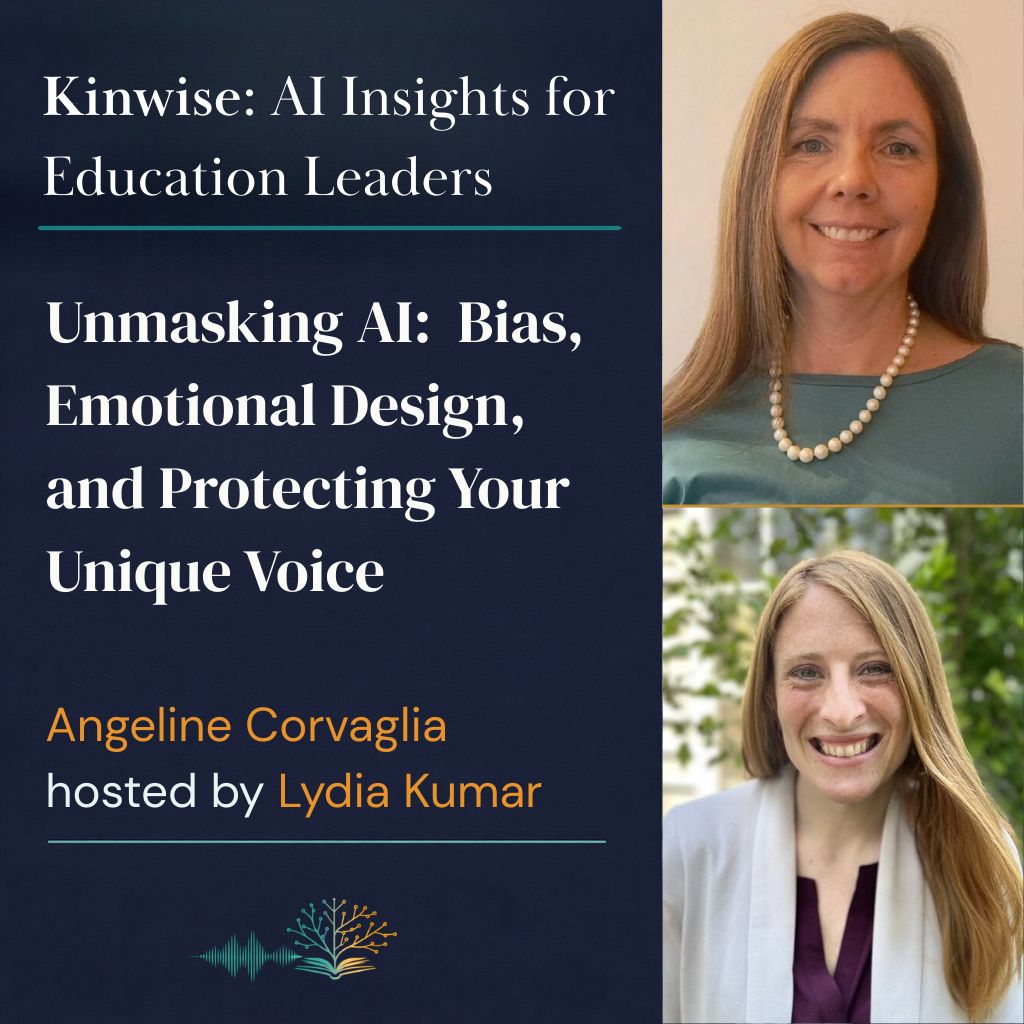
16. Unmasking AI: Angeline Corvaglia on Bias, Emotional Design, and Protecting Your Unique Voice
How is AI trained? Digital literacy advocate and Data Girl creator Angeline Corvaglia pulls back the curtain on the human decisions behind AI. She and Lydia Kumar discuss everything from beauty bias in data labeling and the emotional design of chatbots to the urgent need to preserve young people's unique voices in a world of algorithmic influence.
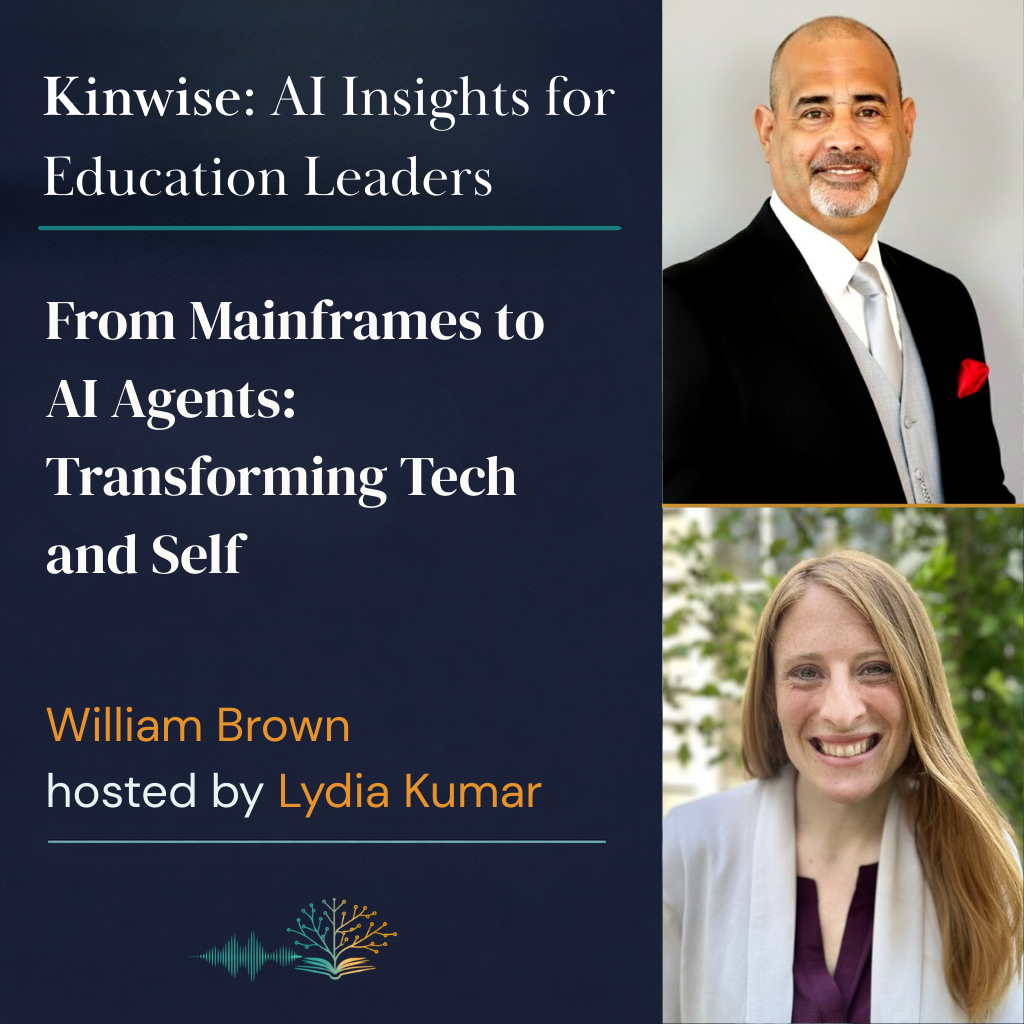
15. From Mainframes to AI Agents: William Brown on Transforming Tech and Self
William A “Bill” Brown, IBM Distinguished Engineer Emeritus and founder of Application Engineering Services, joins us to explore what it takes to lead through rapid technological change. With four decades of experience, Bill shares how curiosity, continual learning, and a human-centered approach have shaped his journey.
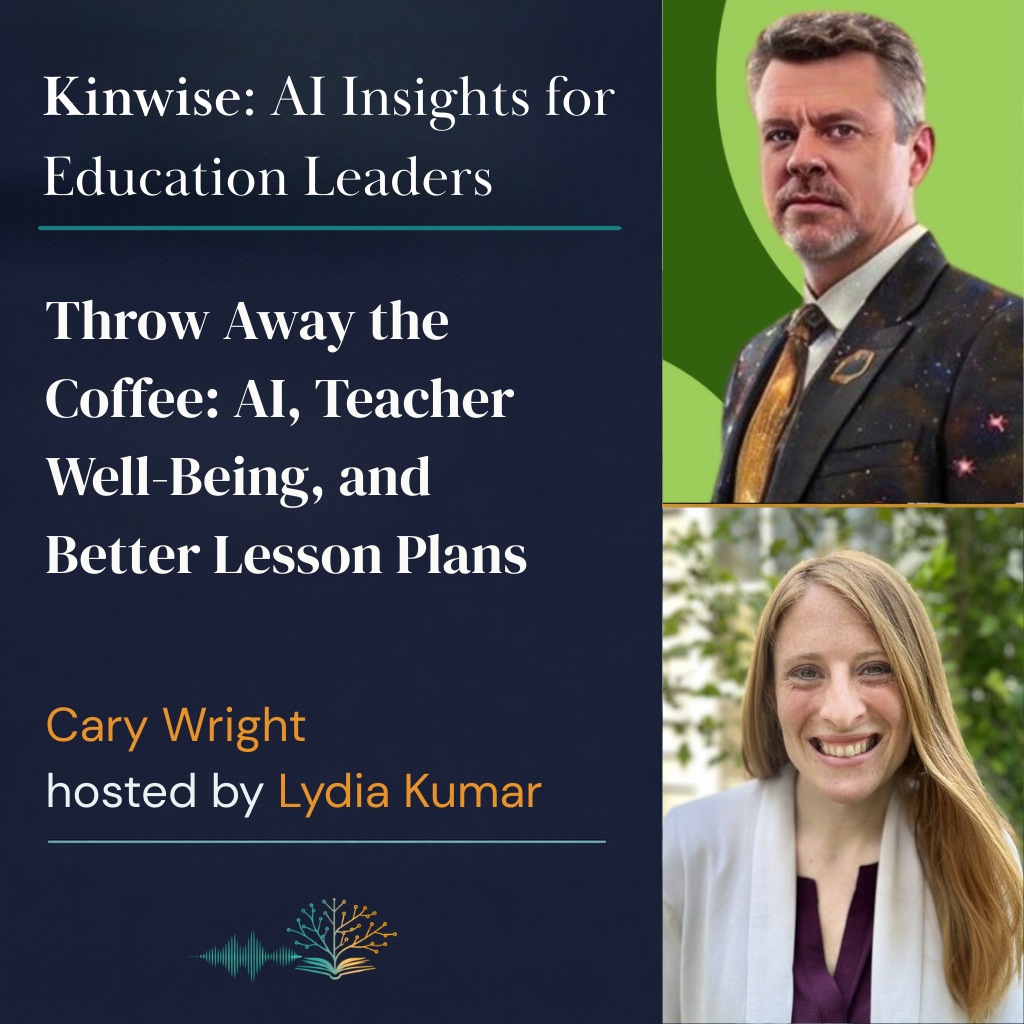
14. Throw Away the Coffee: Cary Wright on AI, Teacher Well-Being, and Better Lesson Plans
Cary Wright, a 30-year veteran educator and co-founder of T.E.A.C.H., joins us to share how he’s helping teachers go from overwhelmed to empowered through practical, responsible AI use.
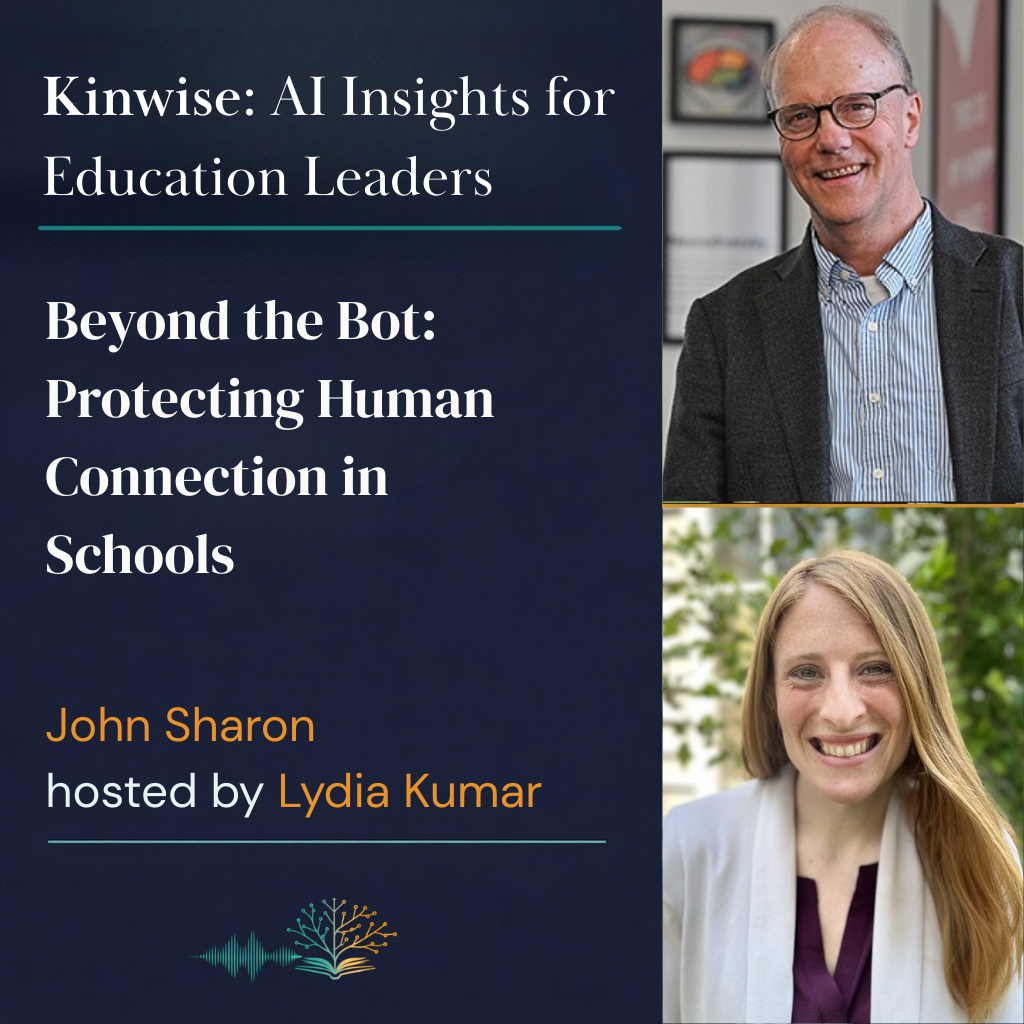
13. Beyond the Bot: John Sharon on Protecting Human Connection in Schools
In this episode, we slow down the AI conversation with John Sharon, Assistant Head for Teaching and Learning at Carolina Friends School. With over 34 years in education, John has seen fads come and go and knows the importance of discernment.